Artificial Intelligence continues to reshape industries across the world. Organizations use intelligent technologies to analyze information, automate processes, and improve decision-making. Systems powered by AI already support recommendation engines, fraud detection tools, digital assistants, and healthcare diagnostics. As technology continues to evolve, businesses increasingly rely on intelligent systems to solve complex problems and generate insights from data.
Because of this transformation, the demand for professionals who understand artificial intelligence and machine learning continues to grow. Many students now plan careers in data science, automation, and predictive analytics. A structured AI and ML Program helps students understand the technologies behind intelligent systems and prepares them for emerging careers in the digital economy.
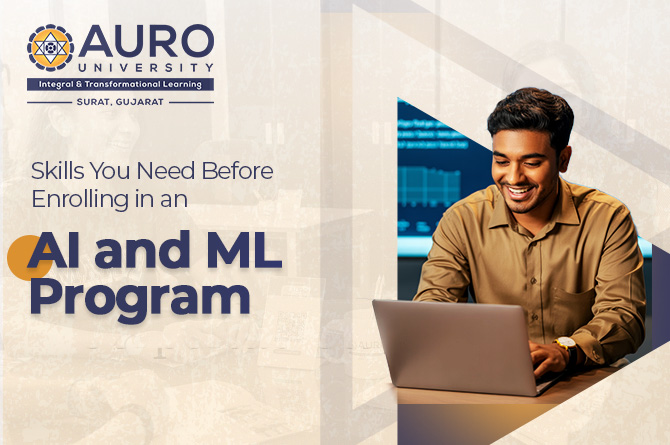
However, success in this field requires more than curiosity about technology. Students benefit greatly when they build strong foundational skills before entering a specialized program. Skills such as mathematics, programming, logical thinking, and data analysis help you understand algorithms and develop intelligent solutions. These abilities also make the learning journey more confident and effective.
Imagine Your Future in Artificial Intelligence
Imagine creating a system that recommends movies based on user preferences. Imagine designing a model that predicts customer behavior in online shopping platforms. Artificial intelligence already powers many of these everyday digital experiences.
Industries such as healthcare, finance, logistics, cybersecurity, and digital commerce rely heavily on intelligent technologies. Businesses analyze customer behavior, automate repetitive tasks, and predict trends through machine learning systems. As organizations continue to adopt these technologies, the need for skilled professionals grows rapidly.
Students who pursue studies in artificial intelligence gain the opportunity to work on impactful technologies. These technologies influence how businesses operate and how people interact with digital services. Preparing for this field early helps you understand advanced concepts and develop stronger technical confidence during your studies.
AI and Machine Learning Programs at AURO University
Choosing the right academic institution plays an important role in building technical expertise. AURO University offers several technology programs that prepare students for emerging careers in artificial intelligence and data science.
Students can explore programs such as:
BSc IT (Hons) – AI/ML or Cyber Security and Forensic
BSc IT (Hons) – AI/ML or Cyber Security and Forensic
This undergraduate program introduces students to programming, machine learning fundamentals, data analysis, and cybersecurity concepts. Students build a strong foundation in modern information technology while also gaining exposure to intelligent systems and automation technologies.
Graduates of this program can pursue careers in areas such as data analysis, AI development, cybersecurity, and intelligent software systems.
MSc Artificial Intelligence
The MSc Artificial Intelligence program focuses on advanced AI concepts including machine learning models, neural networks, deep learning, and intelligent automation technologies. Students gain hands-on experience working with AI frameworks and real-world datasets.
The program also introduces emerging areas such as Generative AI, intelligent AI agents, and data-driven decision systems, preparing graduates for advanced roles in artificial intelligence development and research.
PG Diploma in Artificial Intelligence
This specialized diploma program provides focused training in artificial intelligence tools, machine learning techniques, and modern AI technologies. The curriculum emphasizes practical learning through projects and applied AI solutions.
Students gain the technical knowledge required to work with AI-based systems, automation tools, and intelligent software applications used in modern industries.
Why Study Artificial Intelligence and Machine Learning
Artificial Intelligence is one of the fastest-growing areas in technology today. Companies across industries invest heavily in intelligent automation, predictive analytics, and advanced data systems. As organizations generate massive volumes of data, they require professionals who can analyze this information and build intelligent models.
A structured academic program introduces students to machine learning models, neural networks, and intelligent data systems. Students learn how algorithms identify patterns in data and generate predictions based on those patterns. They also gain exposure to modern tools and frameworks used by professionals in technology companies.
During such programs, students often learn how to:
- Build predictive machine learning models
- Work with real datasets and data pipelines
- Develop intelligent software applications
- Analyze large volumes of information for insights
Universities that emphasize experiential learning also include industry interaction, practical projects, and mentorship opportunities. These experiences help students apply theoretical knowledge to real-world challenges and develop practical expertise.
Mathematical Foundations
Mathematics forms the foundation of Artificial Intelligence and machine learning. Most machine learning algorithms rely on mathematical principles to analyze information and identify patterns. Students who develop a strong understanding of mathematics often find it easier to understand complex algorithms.
Important mathematical areas include linear algebra, probability, statistics, and calculus. Linear algebra helps represent data in vectors and matrices, which many machine learning models use during processing. Probability and statistics support data analysis and prediction models. Calculus helps optimize algorithms and improve model performance.
Strong mathematical thinking also improves analytical reasoning and problem solving. Students who develop this ability can better understand how models learn from data and how predictions improve through training.
Programming Knowledge
Programming plays a central role in Artificial Intelligence development. Intelligent systems rely on software that processes large datasets and performs complex computations. Programming skills allow students to build models, test algorithms, and analyze results.
Python remains one of the most widely used programming languages in Artificial Intelligence. It provides powerful libraries and frameworks that simplify machine learning tasks. Tools such as TensorFlow, PyTorch, and Scikit learn help developers build and train machine learning models efficiently.
Students who understand programming concepts such as loops, functions, and data structures adapt more easily to machine learning frameworks. Regular coding practice also improves logical thinking and debugging skills.
Data Analysis Skills
Artificial Intelligence systems rely heavily on data. Machine learning models learn patterns from large datasets and generate predictions based on those patterns. Because of this, understanding how to work with data becomes a critical skill.
Students benefit from learning how to clean data, organize datasets, and visualize information through charts and graphs. Data analysis tools help identify patterns that guide machine learning algorithms. These skills also help students interpret results and evaluate model performance.
Developing strong data analysis skills prepares students for advanced topics such as predictive modeling, deep learning, and data-driven decision systems.
Logical Thinking and Problem Solving
Artificial Intelligence focuses on solving complex real-world problems through intelligent algorithms. Logical thinking helps students break large challenges into smaller, manageable steps. This ability allows developers to design efficient algorithms and improve system performance.
Problem-solving skills help students evaluate different approaches and test solutions systematically. When building machine learning models, developers often experiment with different techniques before achieving optimal results.
Students who enjoy solving puzzles, analyzing patterns, and exploring technical challenges often perform well in this field.
Understanding Computer Science Fundamentals
A strong understanding of computer science fundamentals supports success in Artificial Intelligence studies. Concepts such as data structures, algorithms, and databases help students understand how software systems process and store information.
Knowledge of algorithms helps developers design efficient models and optimize performance. Understanding databases helps manage large datasets used in machine learning training. These skills allow students to integrate Artificial Intelligence models into real software systems.
Computer science fundamentals also strengthen programming skills and improve technical problem solving.
Career Opportunities in Artificial Intelligence
Artificial Intelligence continues to create diverse career opportunities across industries. Businesses use intelligent technologies for automation, data analysis, and predictive modeling. Because of this demand, professionals with AI knowledge often find opportunities in both startups and global technology companies.
Common career paths include:
- Machine Learning Engineer – develops algorithms that allow systems to learn from data
- Data Scientist – analyzes complex datasets to generate insights and predictions
- AI Researcher – designs new machine learning techniques and technologies
- Business Intelligence Analyst – interprets data trends for strategic decisions
- AI Product Specialist – supports the development of intelligent digital products
- AI Ethics Specialist – You ensure that AI systems are fair, transparent, and free from bias. You help organizations build responsible AI.
- MLOps Engineer -You manage the deployment and performance of machine learning models. You ensure models run smoothly in real-world systems.
- Natural Language Processing (NLP) Engineer – You build systems that understand human language. You work on chatbots, voice assistants, and AI communication tools.
- AI Solutions Architect – You design complete AI solutions for businesses. You connect business problems with the right AI technologies.
These roles require both technical expertise and analytical thinking. Students who develop strong foundational skills often build successful careers in this field.
Interactive Check – Are You Ready for This Field?
Take a moment and reflect on these questions:
- Do you enjoy solving logical and analytical problems?
- Do you like working with numbers and data patterns?
- Do you feel curious about how intelligent systems function?
- Do you enjoy learning programming languages?
- Are you still interested in emerging technologies?
If most of your answers are yes, you already show the mindset required to succeed in Artificial Intelligence studies.
Students who stay curious and continue practicing technical skills often perform well in technology-driven careers.
How to Prepare Before Enrolling
You can begin preparing for Artificial Intelligence studies even before joining a formal program. Early preparation helps you understand complex topics faster and build technical confidence.
Some helpful preparation steps include:
- Learn the basics of Python programming
- Practice mathematics and statistics concepts
- Explore introductory machine learning tutorials
- Work with small datasets and visualization tools
- Build small projects to apply your knowledge
Consistent learning and experimentation improve both technical understanding and problem solving ability.
Start Your Journey in Artificial Intelligence
Artificial Intelligence continues to shape the future of technology and innovation. Organizations across industries rely on intelligent systems to analyze data, automate operations, and improve decision-making.
Developing the right foundational skills helps you understand complex AI concepts and build meaningful solutions. A structured program provides the guidance, resources, and practical experience needed to succeed in this field.
AURO University offers industry-focused technology programs designed to prepare students for modern digital careers. Through practical learning, expert mentorship, and multidisciplinary education, students gain the knowledge and skills required to thrive in Artificial Intelligence and data science.