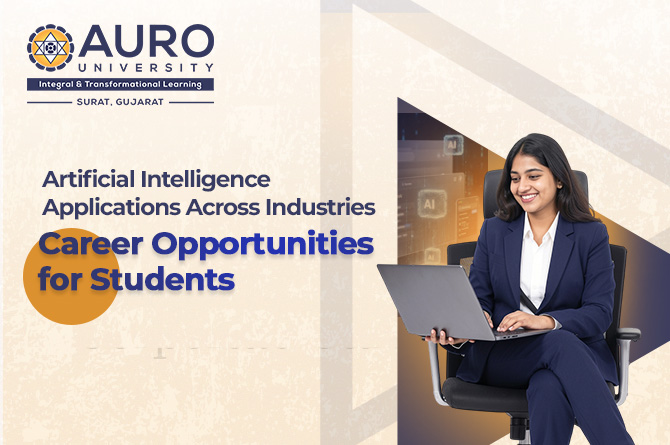

Artificial Intelligence is changing how the world functions. Machines now make predictions, automate processes and handle large amounts of data. People across industries rely on AI to make decisions, improve performance, and reduce errors. Choosing an M.Sc in Artificial Intelligence program helps you enter a field that is shaping the future.
This blog gives you a clear idea of what to expect when you choose this path. It explains what you study, how you learn and where it leads.
The Role of AI in Today’s World
AI is no longer just a buzzword. It plays a part in daily life, from digital assistants in smartphones to algorithms in banking systems. AI tools support doctors in diagnosing diseases. They guide customers in choosing products. They improve how governments deliver services.
The demand for skilled AI professionals continues to grow. The report by Analytics India Magazine says AI-related roles in India grew over 30 percent in the last year. Companies want people who understand how to train models, test them and use them in real situations.
The Value of an M.Sc in AI Degree
A master’s degree in this field is more than a qualification. It builds the mindset and skill set needed for real work. It prepares you to move from theory to practical use. It also shows employers that you are serious about your career and learning journey.
The program focuses on two things. You learn how AI works and how to apply it. You do not just study formulas. You solve problems, analyze data and build models that work in real environments.
What to Expect from an M.Sc in Artificial Intelligence Program
Starting an M.Sc in Artificial Intelligence (AI) is more than just exploring the technology of Web 3.0. It is about understanding how machines can think, learn, predict, and transform real-world systems. This program goes beyond algorithms — it equips you with the knowledge and skills to harness emerging technologies, develop intelligent solutions, and drive innovation in the digital era. Here’s what you can look forward to on your journey into the world of Artificial Intelligence and future technologies.
1. A Blend of Theory and Practice
At the heart of every successful AI implementation is a deep understanding of its building blocks—mathematics, logic, and programming. Our process ensures a strong foundation, but we don’t stop there. We believe the true value of AI is realized through practical application. That’s why we focus on intensive labs and projects, allowing us to experiment with your data, build custom models, and test solutions that deliver real-world results.
Quick Question:
Have you ever tried using AI tools like ChatGPT, Google Gemini or Microsoft Copilot? Think about what you found most challenging. This is where your program will help you grow.
2. Project-Based and Industry-Focused Learning
The M.Sc in Artificial Intelligence (AI) program emphasizes experiential learning through real-world projects.The M.Sc in Artificial Intelligence (AI) program emphasizes experiential learning through real-world projects. You’ll design intelligent solutions to challenges such as image classification, language translation, and predictive analytics — gaining the hands-on skills and innovation mindset that today’s AI-driven industries demand.
Mini Quiz:
Which of these is not a common application of AI?
a) Detecting diseases from X-rays
b) Predicting stock trends
c) Writing poetry automatically
d) Brewing coffee
(Answer: d)
3. Exposure to Advanced Tools
You will work with tools such as Copilot, PyTorch, Scikit-learn, and cloud platforms like AWS and Azure. These are the same tools used by top AI professionals across the world.
Try This:
Search “TensorFlow vs PyTorch” and see which one feels more beginner-friendly to you. This small step can give you a head start before you even begin the program.
4. A Supportive, Collaborative Learning Environment
AI and ML thrive on collaboration. Expect group discussions, research projects, and hackathons. You will share ideas, debate model designs, and refine your work through peer feedback.
Reflective Thought:
Do you enjoy solving puzzles or analyzing why things happen? If yes, you will find AI and ML research projects exciting and rewarding.
5. Pathways to Exciting Careers
From data scientists to AI consultants, graduates find opportunities in healthcare, finance, education, and technology sectors. The program helps you build a portfolio that shows your creativity and technical depth.
Question:
Which sector do you see yourself transforming with AI? Healthcare, business, or education? Write it down and keep it as a reminder of your learning goals.
What You Learn in the Program
The curriculum includes key subjects that form the base of AI and machine learning. Each subject helps you build one part of your understanding. By the time you finish, you know how to use AI tools in a smart and responsible way.
Core Subjects Covered
- Machine learning
- Deep learning
- Natural language processing
- Computer vision
- Reinforcement learning
- Data analytics
- Neural networks
- AI ethics and governance
You also explore mathematics and statistics. These subjects support your learning in AI. You use concepts from algebra, calculus and probability.
Skills You Build During the Course
An M.Sc AI program helps you gain both technical and human skills. You learn how to manage data, create models and present results. You also improve how you work in teams and solve problems under pressure.
Key Skills You Develop
- Programming using Python
- Data cleaning and preprocessing
- Model design and evaluation
- Data visualization
- Deployment of models on cloud platforms
- Critical thinking and decision-making
The program includes lab work and project-based learning. You apply what you learn to real data and real problems.
Tools and Platforms You Use
Technology is a key part of the program. You use tools that are common in the AI world. These tools help you practice what you study. They also prepare you for what employers expect.
Popular tools include:
- TensorFlow
- Keras
- PyTorch
- Scikit-learn
- Jupyter Notebooks
- Gemini
- Microsoft Azure and AWS
You use these tools to complete projects that involve the full AI development cycle.
Types of Projects You Work On
Projects are central to the learning process. These tasks connect theory to practice. They help you build your portfolio and improve your job prospects.
Sample Project Topics
- Detecting pneumonia from X-ray images
- Building a chatbot for university support
- Predicting crop yield from weather and soil data
- Classifying customer feedback using sentiment analysis
- Creating a credit scoring model for microfinance
Each project involves research, design, development and presentation. You learn how to explain your work clearly and professionally.
Career Options After the Program
The job market for AI and ML professionals is growing. Employers in every sector are looking for people who understand data and know how to use it.
Common Job Roles
- Machine learning engineer
- Data scientist
- AI analyst
- NLP engineer
- Computer vision developer
- AI consultant
- Research associate
These roles exist in startups, IT firms, research labs and global enterprises. Some students also move into doctoral research or start new ventures.
The report by the World Economic Forum says AI will contribute to millions of new jobs in the next decade. India is seen as a leading hub for AI talent.
What Employers Expect
Employers seek people who can solve problems, explain insights and build systems that work. They want those who understand both concepts and practical applications. They value professionals who communicate well and think critically.
Top skills include:
- Python programming
- Machine learning algorithms
- Experience with cloud tools
- Teamwork and clarity in communication
- Business understanding and data literacy
An effective master’s program builds these skills through structured learning, projects and mentorship.
Why Choose AURO University
AURO University offers a program that focuses on technical training, personal growth and ethical awareness. You learn in a setting that promotes depth, focus and real-world readiness.
What Makes AURO’s Program Different
- Curriculum designed with global AI standards
- Strong focus on case studies and live projects
- Faculty with both academic and industry backgrounds
- Regular mentorship and career guidance
- Emphasis on responsible and ethical AI
The university believes in holistic education. You are guided not just as a student but as a future contributor to society.
Learning Environment and Student Life
At AURO, students learn in small groups. You work closely with faculty who help you stay focused. You also use well-equipped labs and modern tools.
You take part in hackathons, research events and guest lectures. These help you apply knowledge in diverse ways. They also help you build connections with industry professionals.
You are encouraged to publish your work, share ideas and grow your profile during the course. The environment supports both academic success and personal development.
Is This Program Right for You?
This program suits students with a background in computer science, IT, engineering or data analysis. You should enjoy solving problems and learning new tools. You should also value a structured approach to learning.
You do not need to be an expert. The course takes you through each level of skill. You learn to think, practice and present your work clearly.
A Career That Grows With You
AI is shaping the world in new ways. Businesses rely on it for growth. Healthcare uses it for faster results. Education is changing because of it.
When you complete the M.Sc AI program, you have what it takes to step into this space. You finish with practical knowledge, guided experience and a portfolio that shows your ability.
You are prepared for roles that reward thinking, building and improving systems. You are part of a field that is solving real problems with smart tools.
Explore the M.Sc in Artificial Intelligence Program at AURO University
AURO University invites you to join a program that prepares you for impact. You study in a place that values discipline, application and ethics.
Learn from experts, grow through projects and step confidently into the future of AI.